
Once you have arrived
We will make your trip as stress-free as possible once you arrive, with professional guides, airport transportation, and good lodging.
Nonetheless, being prepared is usually a smart idea. For pre-departure guidance, please examine our travel instructions.
In large part, all of the information presented regarding Uganda also applies to Rwanda. Please do not hesitate to contact us if you have any additional inquiries.
Climate
Uganda is situated between 29° and 35° east longitude and 4° and 1° north and south latitude. Because we are on the equator, we get a pleasant climate all year! The average temperature is between 22 and 28 degrees Celsius. The temperature may drop significantly in higher altitude regions such as Bwindi, Kisoro, Lake Bunyonyi, Mount Elgon, Sipi Falls, and the Rwenzori Mountains (especially at night).
Be warned, however, that the tropical environment has a rainy season, despite the fact that there will always be plenty of sunshine hours. March to May and November to December are the rainy seasons.
Travel Customs
Immigration:
Allowances for visitors to Uganda/Rwanda over 18 years:
Wine: 1 litre
Perfume: ½ litre
Cigarettes, cigars etc
Spirits and liquors: 1 litre
Visa
Most people from abroad need a visa to enter Uganda. The visa is generally valid up to 90 days.
The following fees apply.
Single entry: US$ 50.-
Multiple entry: US$ 100.-
East African tourist visa US$ 100 (three month multiple entry for Kenya, Rwanda and Uganda)
To avoid waiting at arrival, apply for an e-visa in advance: https://visas.immigration.go.ug/#/
Uganda and Rwanda also provide visas at arrival, but this might cause some waiting time.
VISA Requirement
All travellers to the Repubic of Uganda MUST have a valid Yellow Fever Immunisation card.
You need a Passport with a minimum validity of six months (the validity may vary according to nationality)
Electricity
Three-pin British-style plugs are utilised. You’ll need a voltage converter if your gadget doesn’t take 240 V, 50 HZ.
Most hotels have charging stations for cameras, phones, and other electrical devices. Because the number of outlets is typically restricted, you might want to carry extra batteries for your camera and an extension lead with extra outlets. Some hotels do not have power at certain hours, and there may be power outages.
Disabled Access
official language used to be French, but it is now EUganda and Rwanda, unfortunately, are not yet fully ready to accommodate people with impairments. Most of the accommodations lack elevators or lifts, and walkways are frequently unstable (loose ground or stones) and have steps. Not to discourage you. Please don’t hesitate to get in touch with us so that we can help you on your way.
Internet:
WIFI is accessible in most accommodations for light use such as social media and email, making it simple to stay in touch with family and friends. For high volume usage, certain accommodations may levy a fee.
Language
Uganda is a country where people speak a variety of languages. In Uganda, over 40 different languages are spoken on a daily basis. English is the official language of the United Kingdom, and it is taught in schools, used in courts of law, and in most newspapers. Swahili is also extensively spoken in East Africa and is often utilised as a commerce language. Swahili has gained in popularity as a result of Uganda’s major economic ties with Kenya and Tanzania, and the Ugandan Parliament proclaimed it as the country’s second official language in 2005. The Baganda people speak Ganda, or Luganda, which is regarded to be the most widely spoken vernacular language.
Different native languages are also spoken in Rwanda and most east African countries. The official language used to be French, but it is now English.
Smoking
In public locations, smoking is severely prohibited. However, some restaurants and pubs do have designated smoking areas for their patrons.
Uganda has a country code of +256. When employing the country code, a Ugandan phone number usually begins with a 0 that is omitted.
077806xxxx or +256-77806xxxx is an example of a phone number.
To make an international call, precede the International Direct Dialling code with 00.
Mobile Use
MTN and AIRTEL are two of the mobile service providers. In Uganda, reception is generally good, while there are some remote places where reception may be limited.
A SIM card can be purchased for $5 (USD). The major companies’ airtime and SIM cards are accessible throughout Uganda. Your phone must be unlocked and capable of connecting to any network.
Time
Uganda is located in the UTC +3 Eastern Africa Time (EAT) zone. Uganda does not observe daylight saving time; hence it is two hours ahead of Central Europe (CET) in the winter and one hour ahead in the summer.
Rwanda is one hour behind Uganda because it utilises Central Africa Time (CAT), which is UTC +2.
Luggage
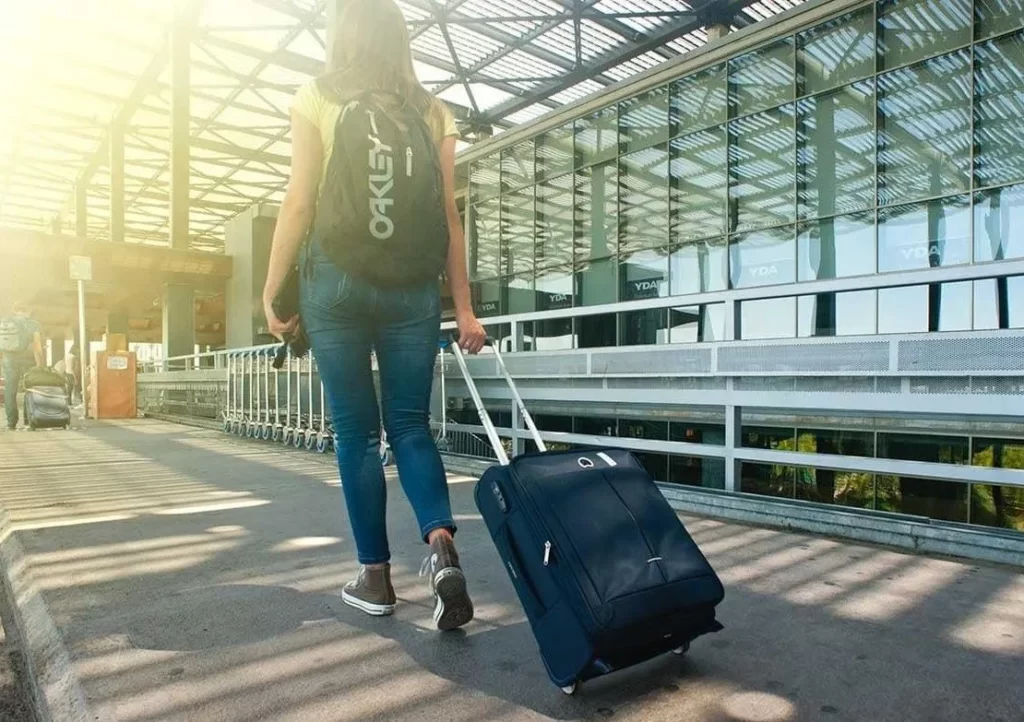
A soft suitcase or luggage is more manageable. It must fit in the car, and a hard cover luggage may be more readily damaged on bumpy travels.
If you’re taking a domestic flight within Uganda, keep in mind that just 15kg of luggage per person is permitted. If you have any questions on this subject, we will be happy to assist you.
Health
Insurance
It is your responsibility to conduct research and purchase adequate travel insurance to cover your trip. We recommend purchasing travel insurance when you confirm your reservation with us, especially if you want to be covered if you have to cancel your trip.
You should pay special attention to whether or not your policy covers transportation to the most appropriate hospital. This may not be the case in other circumstances, and medical transfer expenses can be in the hundreds of dollars.
Please read the table below for information on the emergency medical evacuation service that is included in all of our tours.
AMREF Flying doctor’s tourist evacuation scheme
In the unfortunate case of a medical emergency requiring immediate hospital treatment, the AMREF Flying Doctors Tourist Evacuations Scheme provides emergency medical evacuation from anywhere in Uganda or Rwanda. The patient will be evacuated to one of AMREF’s Nairobi partner hospitals.
Registration with the scheme also gives you access to AMREF’s Medical Helpline for information and advice 24 hours a day, 7 days a week.
This service is given to provide you added peace of mind and is not intended to be a replacement for comprehensive travel insurance coverage that you should obtain prior to your trip. More specific information will be provided upon request or at the time of booking.
We provide this as an extra, optional service to clients who book accommodation or other travel services with Kikooko. visit their website
HIV/AIDS
is rampant in East Africa, as it is in many other nations. If you come into touch with blood, make sure medical needles are sterilised and come from a sealed packet.
Note: Any medication you need to take during your journey should be brought with you, as it may not be available in Uganda or Rwanda.
Please see your doctor or an accredited travel health organisation at least 8 weeks before to trip for immunisation information. All tourists to Uganda and Rwanda must be vaccinated against yellow fever.
Money
Currency
The Ugandan Shilling is the local currency (UGX).
Although most restaurants and motels take USD, it is recommended that minor sums be paid in Shillings.
Rwandan Francs are the country’s currency (RWF)
VAT (Value Added Tax) on sales and services is 18% in Uganda.
Banks:
In the town centres, there are a variety of banks to choose from. Prepare ahead of time if you’ll be travelling to a remote location. Before embarking on your journey, you may wish to visit a bank in Entebbe or Kampala.
Exchange bureaux
Large commercial banks, as well as malls and larger town centres, offer foreign exchange services.
Cash
We recommend paying for little purchases with Ugandan Shillings, such as food, drinks, snacks, souvenirs, laundry, and so on. In Uganda, you can convert US dollars, Pounds Sterling, and Euros almost anywhere, although the best exchange rates are in Kampala, the city.
Use large denomination bills ($50 or $100) while exchanging money. Smaller bills have a substantially lower exchange rate. Notes that have been torn or damaged in any manner will not be accepted. US dollar bills issued before 2006 are likewise not accepted. Before embarking on your trip, please double-check the year of your dollars.
Because Euros and Pounds have an excellent conversion rate, don’t convert them to dollars and then back to Ugandan Shillings.
We recommend having US dollars on you at all times for any additional hotel payments and activities, as this currency is accepted everywhere and many pricing are in USD.
Credit cards
Although some hotels and restaurants take credit cards, it is not widely accepted in Uganda, and you will be charged an additional 10% fee. We don’t encourage utilising credit cards as your primary payment option.
ATM machines from major Ugandan banks can be located in all of the country’s major trading centres. In smaller communities, there may only be one or two machines, and they are more likely to be out of operation. A safari may also entail not visiting a town for 5-8 days. Make sure you always have adequate cash on you. Additional fees for cash withdrawals may apply depending on your card provider.
Cheques
Traveller’s checks are rarely accepted, and if they are, it is at an extremely low exchange rate. Traveller’s cheques should not be brought.
Tipping
In local taverns and restaurants, it is traditional to tip for good service. a gratuity of 5 percent would be extremely appropriate and 10 percent generous. Please avoid using foreign coins such as £1 (GBP) or €1 (EUR), as they are worthless.
Safety & Security
Although the vast majority of tourist excursions to Uganda go off without a hitch, as with any overseas trip, it’s prudent to be aware of a few scenarios to which you should pay special attention. It is not recommended to travel after dark, particularly outside of Kampala, because the roads are in poor condition and are frequently unlit. The only exception is the Kampala-Entebbe highway. In cities, it is recommended that you travel in groups or use a taxi rather than strolling along the streets. Traveling with a guide who is familiar with the area and any potential hazards is the best option.
Useful Links: Embassy
